
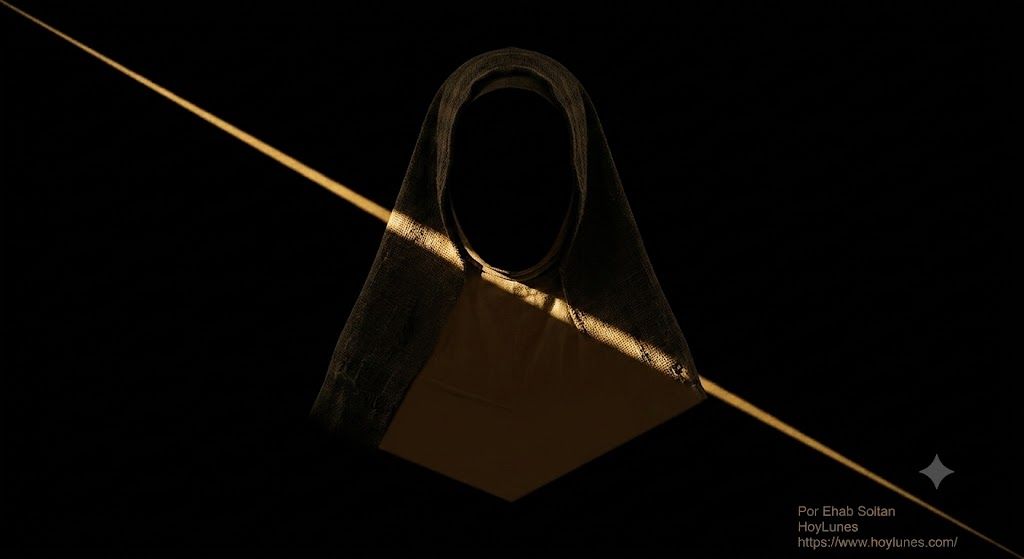
The Architecture of Silence: When the Geometry of Refuge Casts Its Own Shadows.
A film set in an 18th-century convent serves as a starting point to explore why places conceived to protect us remain some of the most powerful settings for discussing fear, trust, and the ´human condition’.
By Ehab Soltan
HoyLunes – Imagine a threshold of weathered stone. Behind it lies a silent building, a space conceived for contemplation and tranquility. When observing a structure with these characteristics, the first natural reaction is the search for calm; the environment evokes a protective isolation against the noise and chaos of the outside world. However, the moment the light begins to fade over the ancient walls, a subtle unease disturbs that initial calm. An inevitable question then arises: why do spaces built to house the greatest of securities prove so disturbing when transformed into the core of a narrative? The answer does not reside in the physical structure, but in the psychology of those who inhabit it. Buildings change little with the passage of time; those who change are the questions we project onto them.
Buildings change little with the passage of time; those who change are the questions we project onto them.
Fear Needs Trust Before It Can Exist
There is a fundamental premise in the human experience: fear reaches its maximum intensity not in the presence of an obvious danger, but at the moment an expectation of security is broken. We are not primarily disturbed by that which presents itself as an explicit threat; we are profoundly destabilized by discovering vulnerability in what should protect us. Throughout cultural history, this phenomenon manifests in universal settings. A family home, a school intended for learning, a hospital dedicated to healing, a convent, or the very heart of a community are institutions designed under the principle of custody.
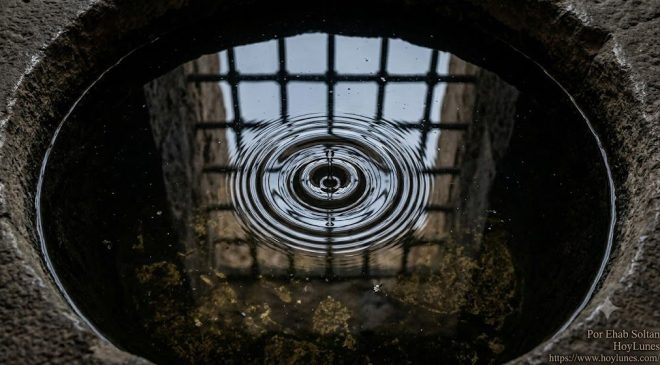
Cognitive neuroscience and evolutionary psychology explain this reaction through the concept of predictive processing: our brain functions as a constant prediction machine that generates models of the environment to save energy and ensure survival. When a “violation of expectations” occurs—especially in an environment coded as safe—the nervous system experiences a massive prediction error. This triggers a threat perception response that is far more acute and disorienting than if we were in an openly hostile space; true tension arises from broken trust. Perhaps that is why these stories continue to work in any era, even as settings and societies change.
The Symbolic Weight of Spaces in Fiction
A recent example is The Convent (El Convento), a historical thriller directed by Ángel M. Chivite and Luis Galindo, which functions as a contemporary reflection of this tradition. Beyond its plot or its specific aesthetic proposal, the film is of interest as a case study on the use of settings with a dense symbolic background. By placing the action in an 18th-century cloistered community, the film does not seek to create a mere period chronicle, but to use the weight of the institution to explore universal human conflicts, such as isolation, internal power dynamics, and the fragility of personal convictions when the environment becomes oppressive. This approach turns the space into a narrative tool rather than a simple historical backdrop.
Psychological Attraction Beyond Genre
The fascination with these tales transcends the codes of a specific genre; it responds to a profound psychological curiosity. Concepts such as uncertainty before the unknown, collective suggestion, the weight of extreme authority, and the voluntary renunciation of one’s own judgment are elements intrinsic to the human condition. In a state of absolute isolation, the perception of reality is modified and becomes more permeable to the influence of the environment. These dynamics show how the mind reacts when stripped of its usual reference points, an analysis that is not ascribed to any particular doctrine, but to the behavior of our species in situations of extreme vulnerability.
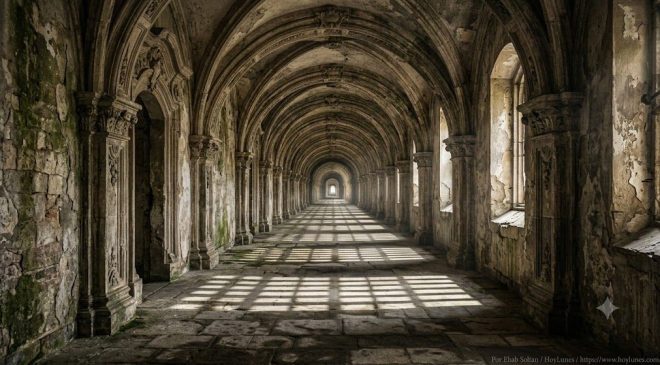
The Building is a Silent Character
Inscribed in the great works of literature and cinema, the geographical or architectural space abandons its condition as a simple backdrop to assume an active role in the story. The building is a silent character. Some spaces do not speak, but they condition every decision made by those who inhabit them. Historically, Gothic literature and psychological drama have resorted to lighthouses surrounded by the ocean, abandoned hospitals, winter hotels, boarding schools far from civilization, ships on the high seas, or large rural mansions. In all of them, the geometry of the place, the play of light and shadow, and the impossibility of escaping alter the psychology of the characters, transforming the container into an element of the narrative as decisive as the dialogue itself.
History as a Source of Inspiration
The need to explore the limits of conduct is not a modern invention. For centuries, artistic creation has drawn from chronicles and historical archives to build mythologies that allow for the examination of society’s shadows. Historical archives preserve episodes that, interpreted from the present, continue to raise difficult questions, showing periods of institutional crisis or extreme fervor. The relevance of rescuing or being inspired by these annals of the past lies not in the documentary accuracy of the replica, but in the ethical and philosophical questions the author poses to the contemporary viewer through the mirror of history.
The Reflection of the Viewer on the Screen
By stripping these stories of their period ornamentation, what remains is a direct examination of the current viewer. We continue to consume narratives about closed communities because they operate as microclimates where essential concepts are examined: the nature of power, the limits of obedience, the management of collective fear, and the search for individual identity against the homogeneity of the group.
Cinema offers a space where those questions can be explored without unique answers; the true confrontation and subsequent analysis belong exclusively to the conscience of the observer from the inheritance of the present.

The True Cultural Value of Cinema
This approach allows us to understand cinematic art as a cultural tool of the first order, far removed from the logic of the box office or mere entertainment. Cinema possesses the capacity to rescue collective memories dissipated by time, incentivize curiosity for historical research, encourage intellectual debate, and foster dialogue between disciplines such as history, psychology, philosophy, and art. By transforming cold archival data into a sensory and emotional experience, the screen connects different generations under the same reflection, reminding us that art is, above all, a testimony of social evolution.
Toward a Reflective Narrative
The persistence of these themes in the collective imagination invites us to investigate the configuration of our most intimate certainties. It is relevant to examine the reasons why certain environments transmit a sensation of innate protection even before having crossed their threshold, as well as the profound transformation experienced by the viewer when a plot abruptly breaks that pre-established security.
In the same way, the ability to continue experiencing intense empathy for moral and existential dilemmas narrated centuries ago confirms that the essential concerns of the human condition remain unalterable. This constant fascination with mystery and vulnerability in spaces of apparent custody exposes the psychological springs underlying the evolution of fear, transforming what could be simple questions into a fluid analysis of how we understand our own security.
Great stories remain because they never speak only of the place where they happen. They speak of us. Of our certainties, of our doubts, and of the way we try to understand that which challenges our idea of security. Perhaps that is why the best stories never end when the credits appear.
Perhaps that is why, when crossing the door of a convent, a house, or any other apparently protected space through a work of art, the true journey does not consist in discovering what happens inside those walls, but in asking ourselves what emotions they awaken in the person who observes them.